Drink Factory Simulator Workers and the Day/Night Cycle
Keep shifts staffed, machines repaired, and night pressure from wrecking tomorrow’s orders.
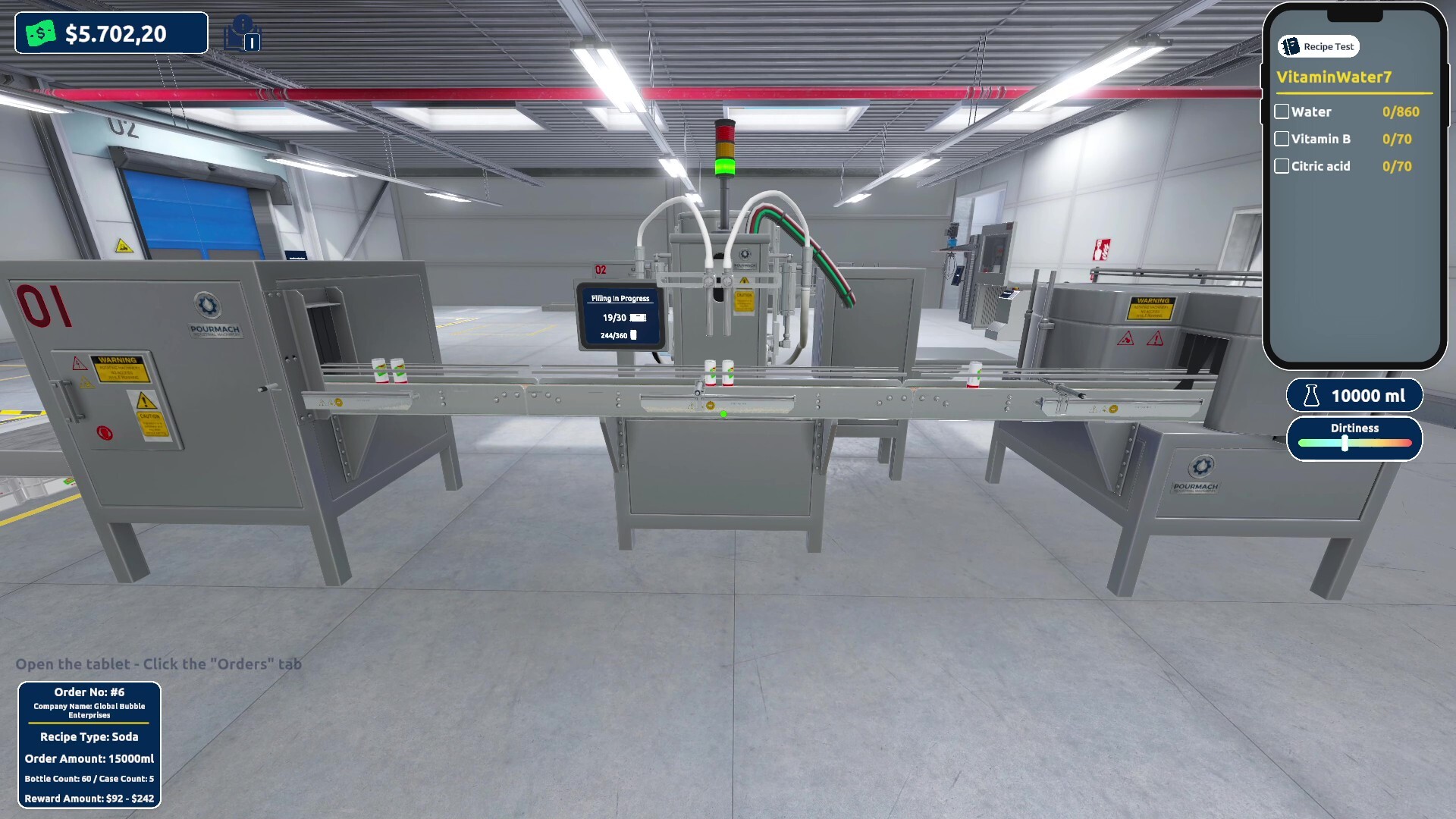
Why workers and the clock matter now
Drink Factory Simulator entered Steam Early Access on August 13, 2026 (app 3913840) with worker systems and a day/night cycle already active beside Analysis Mode, the production line, and deliveries. Those two systems are easy to ignore on quiet Prologue nights and expensive to ignore once Early Access orders stack up. This guide explains how to treat staff, repairs, and the clock as part of the same loop as mixing and shipping — not as decoration after you “finish” the recipe.
Pair this page with Production Line when machines stall, Orders and Deliveries when timers punish slow gates, and Troubleshooting when a shift collapses into idle stations.
What “workers” cover in Early Access
Studio EA messaging lists worker systems and machine repair as playable end-to-end. In practice that means your factory is not only a layout puzzle: people (and repair actions) absorb friction when lines get dirty, machines fault, or you cannot be everywhere at once. Online co-op with up to three friends multiplies this — one player can babysit analysis while another clears repair queues and a third escorts pallets.
Treat workers as capacity multipliers, not autopilot:
- They reduce sprint distance when you assign them near the bottleneck you actually feel.
- They do not invent recipes. Discovery still lives in Recipe Discovery.
- They cannot save a formula that fails Analysis Mode scoring; they only help you ship a correct formula faster.
Day/night as an economic rhythm
The day/night cycle is not cosmetic. Production, testing, and delivery pressure shift as the clock moves. A useful Early Access habit is to split each cycle into three blocks:
- Morning / open — Read the order board. Note drink types, quality bars, and which stations look starved from last night. Do a short Analysis Mode pass only if a formula is still weak; otherwise start the line cold and clean.
- Midday / volume — Push sterilize → fill → pallet → gate. Spend cash only on the slowest step you observed this morning. Revisit Early Game Priority before impulse-buying a new drink family.
- Night / stabilize — Clear leftover pallets, run repairs, mop or reset dirty zones if the build tracks cleanliness, and write notebook notes for tomorrow’s ratios. Night is for preventing tomorrow’s panic, not for starting a brand-new mega-mix while gates are still hungry.
If you invent every new soda at midnight while orders expire, you are fighting the cycle instead of using it.
Repair discipline before hero sprints
Broken or jammed machines create fake “layout” problems. Before you rearrange half the floor:
- Confirm the formula still totals 100% and still scores well in Analysis Mode.
- Walk sterilize and fill for obvious stops — Early Access patches have already targeted filling-machine edge cases, so keep Patch Notes bookmarked.
- Repair before you buy another parallel machine. Two broken fillers are worse than one healthy filler.
- In co-op, assign a rotating repair lead so nobody assumes “someone else will hit E on it.”
Deep machine spending advice stays on Machine Upgrades and cash planning on the Economy Planner.
Staffing patterns that waste less money
Solo managers
- Keep Analysis Mode sessions short and timed: ten minutes of testing, then a forced return to the line.
- Park tools and repair kits on the path between mix and fill so night repairs do not become warehouse scavenger hunts.
- Prefer one clean drink shipping on time over three half-finished experiments when the clock turns over.
Two-to-four player lobbies
Use the role split from Co-op Setup:
- Analyst owns the notebook and calls when a recipe is ready for volume.
- Line lead feeds mix/blend/sterilize/fill and calls repair needs early.
- Logistics owns pallets, gates, and the order board.
- Fourth player (if present) floats repair + overflow logistics.
Rotate after a successful day so knowledge of Analysis Mode is not trapped in one head.
Connecting workers to recipe and order quality
Workers amplify whatever formula you give them. A low Analysis Mode score shipped at high volume is a faster way to burn ingredients and tank satisfaction. Sequence matters:
- Stabilize ratios in the lab (Recipe Discovery).
- Run a pilot batch through sterilize and fill.
- Only then staff the line for volume and lean on the day cycle for pacing.
- Log results on the Recipe Checklist so tomorrow’s morning block starts with facts, not vibes.
Early Access caveats
- Balance and worker UI labels can shift during the planned 6–12 month EA window.
- Roadmap storefronts and open-world trucking are later goals, not excuses to ignore gate deliveries tonight — see Roadmap.
- There are no official cheat codes that spawn perfect staff or skip night pressure.
What to read next
- Untangle stations: Production Line
- Fix timers: Orders and Deliveries
- Recover from chaos: Troubleshooting
- Re-check launch expectations: Early Access
- Return to the Guides Hub for the full index
Staff and the clock are how Drink Factory Simulator turns a clever formula into a business. Treat them as first-class systems and Early Access nights stop feeling like random disasters.
Frequently Asked Questions
Quick answers about recipes, factory lines, and Early Access.
Are workers available in Early Access?
Yes. Agosto lists worker systems and machine repair as active in the Early Access build alongside recipe discovery, production, orders, and day/night.
Should I invent new recipes at night?
Prefer short, targeted tests. Use night mainly to clear pallets, repair, and prepare notes so morning volume starts clean.
Do workers replace Analysis Mode?
No. Workers help throughput and upkeep. You still discover ratios yourself in Analysis Mode.
How does co-op help with shifts?
Online co-op supports up to three friends so you can split analyst, line, logistics, and repair duties across the day cycle.